Turning B2B Healthcare Payments Into a Working Capital Lever
Overview
Healthcare finance teams are being asked to do more with every dollar. As expenses continue to rise across supplies, pharmaceuticals, labor and daily operations, preserving liquidity and optimizing working capital have become strategic priorities. American Hospital Association reported that total hospital expenses rose 7.5% in 2025, including a 9.9% increase in supply expenses and a 13.6% increase in medicine expenses.
At the same time, procurement spending remains essential. Health systems cannot simply reduce purchases without impacting operations and patient care. Instead, finance leaders are looking for ways to improve cash flow, extend payment flexibility and generate greater value from existing spend.
At the same time, healthcare leaders are recognizing the need for more modern payment processes. Many AP teams still rely on manual workflows and traditional payment methods, including check and ACH. According to PYMNTS.com, paper checks are still used in 30% of B2B healthcare transactions. While these methods move funds, they do little to help organizations optimize payment timing, unlock working capital benefits or improve visibility into cash flow performance.
Modern payment strategies offer a different approach. By digitizing supplier payments and introducing greater flexibility into the payment process, healthcare organizations can strengthen working capital management while reducing operational complexity. The most effective solutions integrate seamlessly with existing AP workflows, making it easier to improve cash flow, capture efficiencies and support financial performance without disrupting day-to-day operations.
Commercial cards as a timing tool
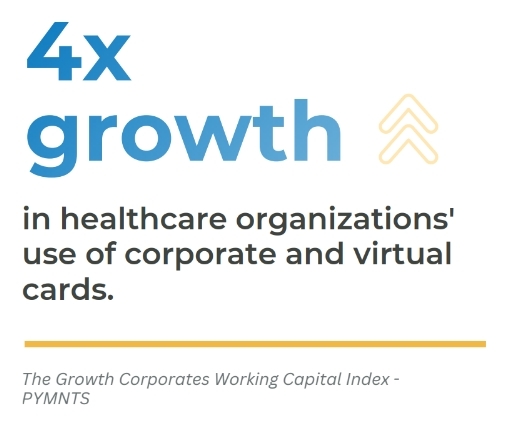
As healthcare organizations place greater emphasis on working capital management, many are evaluating how different payment methods, including commercial cards, can help improve cash flow and liquidity. According to PYMNTS.com, healthcare growth corporates not only quadrupled their use of corporate and virtual cards overall and took on 50% more financing, but 41% of these firms used the working capital options to seize growth opportunities.
Commercial cards are gaining attention because they give buyers greater control over how payments are funded and timed, while also offering beneficial balance sheet treatment. Instead of viewing supplier payments as purely operational, health systems can use card-funded payments as part of a broader working capital strategy, helping preserve cash longer, extend DPO and create more value from procurement spend.
The barriers to usage
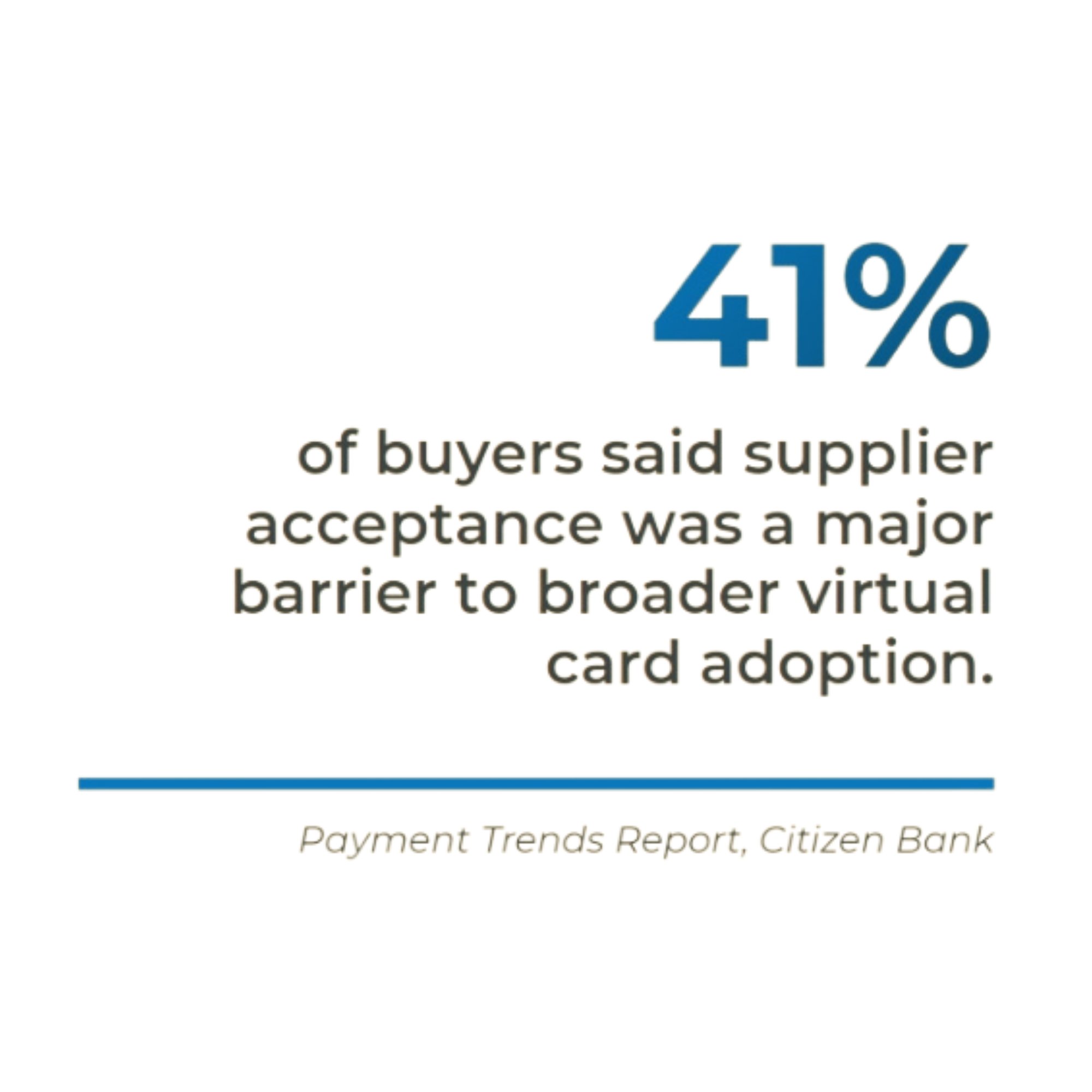
As beneficial as cards can be, the impact of a commercial card strategy depends on how broadly it can be used. Traditional card programs often run into supplier acceptance barriers, with cost being one of the biggest obstacles. Many suppliers are reluctant to accept card payments when they are responsible for the associated processing fees. For buyers, this can limit how much AP spend can be shifted to card, making it harder to fully realize and maximize the working capital benefits.
How to unlock more opportunity and revenue for your existing procurement spend
Boost 100® helps healthcare systems use their commercial card for up to 100% of supplier payments, regardless of whether suppliers accept card directly.
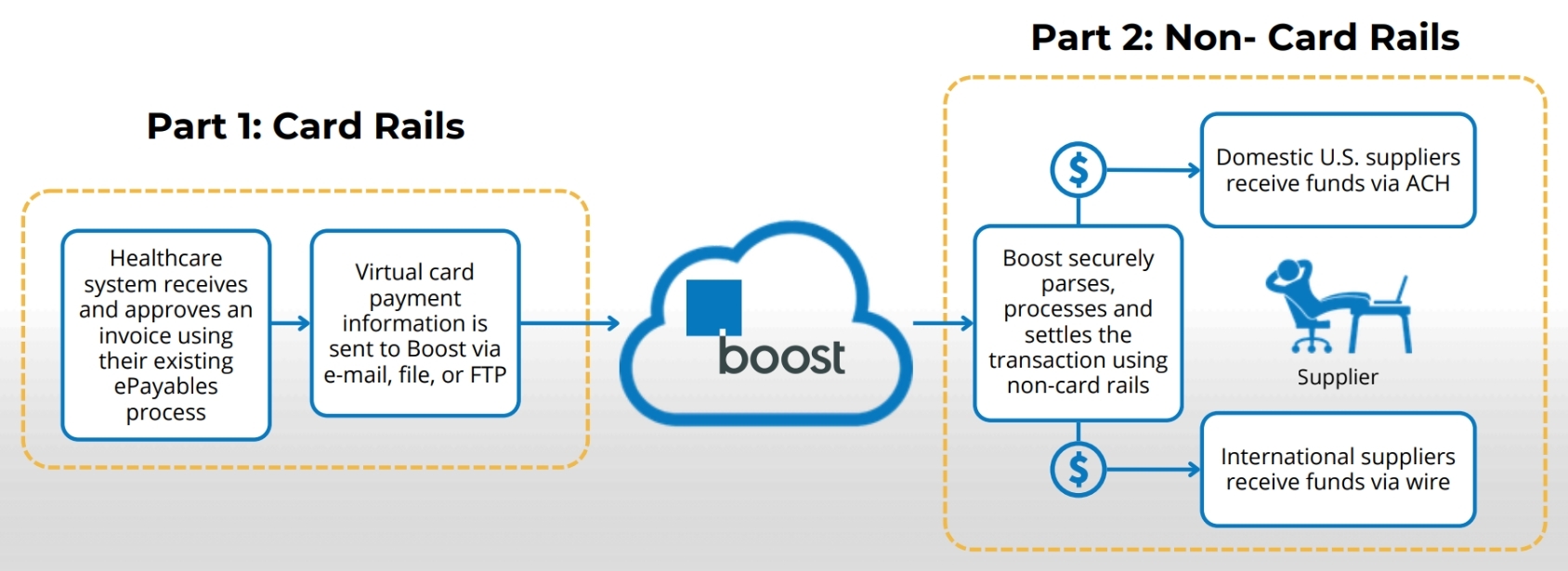
Through a buyer-funded model, suppliers can receive payment through non-card rails such as ACH or wire, while buyers fund the transaction by card.
This helps address a key barrier to broader card usage: supplier cost sensitivity. Through a buyer-funded model, healthcare systems can cover the transaction cost when the economics support it, with Boost’s proprietary interchange rates helping make that cost significantly lower than traditional card acceptance costs.
When paired with extended float, early payment discounts or favorable all-in cost comparisons, this can create a net financial benefit for healthcare systems while keeping the supplier payment experience simple.
How it works
Boost 100 utilizes a two-step process that enables healthcare systems to use their commercial card and suppliers to receive payments via ACH or wire.
Key Use Cases for Boost 100
Use Case 1: Working Capital Optimization
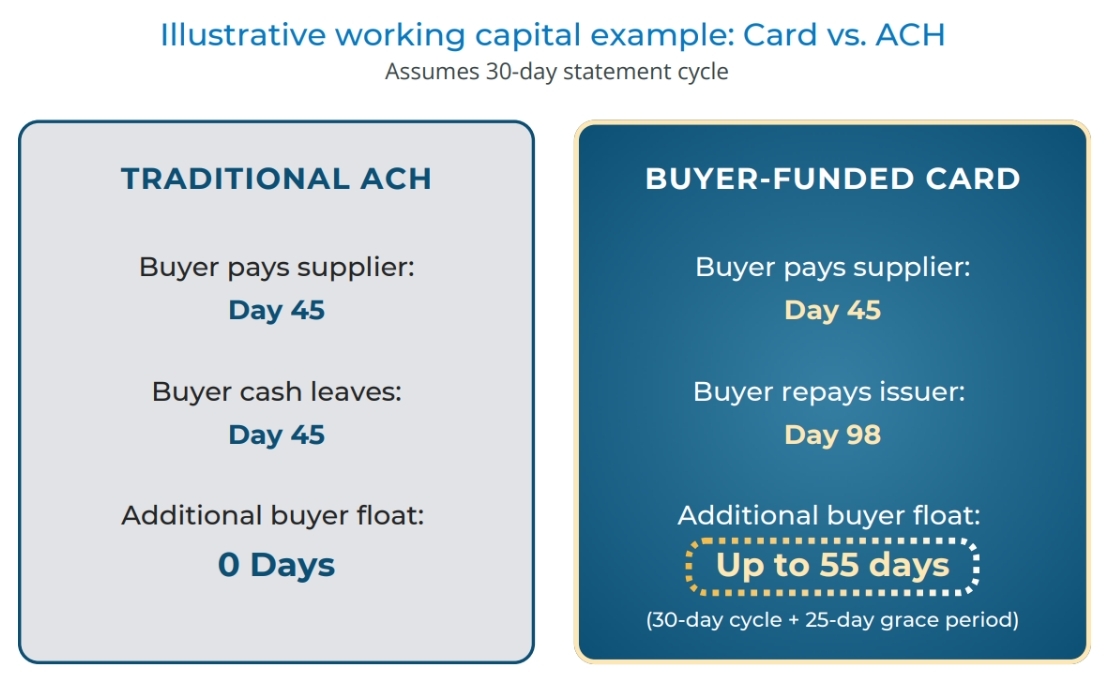
That timing gap can be valuable for large health systems managing significant procurement spend. Additional days of float can help extend DPO, improve short-term liquidity and reduce the need to rely on other working capital tools. At the same time, suppliers can receive payment sooner without requiring the buyer to release cash immediately.
Healthcare Case Study: Working Capital Maximization
A large American healthcare system with 600+ care sites across 19 states was looking to utilize a commercial card program to optimize working capital and extend DPO
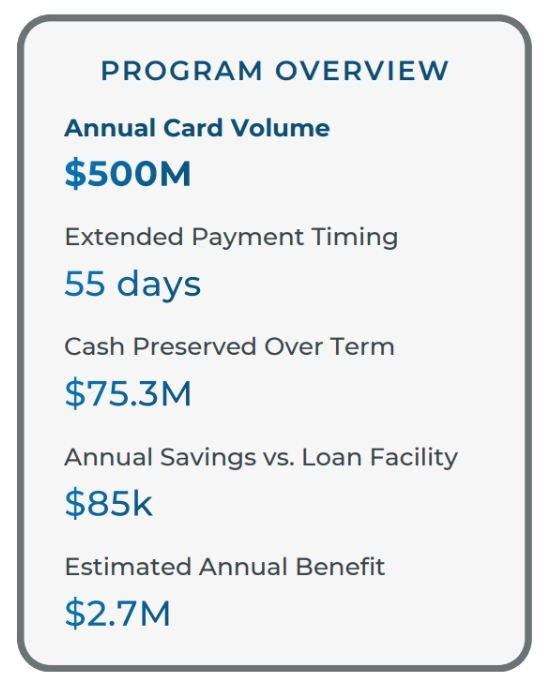
Through a buyer-funded Boost 100 program, the client modeled $500 million in annual card volume at a 1.00% all-in card rate and compared the program against a 6.75% loan facility.
With Boost 100, suppliers continued receiving payment through ACH/EFT on time, while the buyer funded the transaction by card. This gave the client 55 days before settling with the card issuer, allowing the organization to keep cash in the business longer.
1. COST OF THE CARD PROGRAM:
$500M annual card volume x 1.00% all-in card rate = $5.0M annual card cost
2. VALUE OF THE 55-DAY PAYMENT WINDOW:
$500M annual card volume x 6.75% loan facility x 55 days / 365 = ~$5.09M value
3. ANNUAL SAVINGS VS. LOAN FACILITY:
~$5.09M loan facility comparison - $5.0M card program cost = ~$85K in annual savings
The larger benefit came from holding cash longer. With a 55-day payment window, the buyer kept approximately $75.3 million in cash available during the payment term instead of releasing it immediately.
When the model also factored in the time-value benefit of holding cash during that 55-day window, the estimated annual benefit increased to approximately $2.7 million.
The card program more than offset the loan facility comparison, creating annual savings before factoring in the added value of holding cash longer, operational benefits and accounting benefits.
Use Case 2: Early Payment Discount Arbitrage
Many suppliers offer early payment discounts to buyers. If a buyer pays within an early payment window, often 10 to 15 days, the buyer may be able to reduce the invoice amount by a certain percentage, commonly around 2% to 5%, creating a clear savings opportunity.
For many buyers, the challenge is that capturing the discount usually requires them to release cash sooner than planned. Commercial cards can help solve that timing challenge. By using a card, the buyer can pay the supplier within the early payment window while still preserving cash through the card billing cycle.
The economics come down to how the transaction is structured. Although the payment can be made by card, a supplier is unlikely to offer an early payment discount and absorb the cost of card acceptance on the same transaction. That is where a buyer-funded model becomes important. The buyer covers the transaction cost, helping preserve the supplier’s economics while keeping the discount on the table.
This is where the arbitrage opportunity comes in. When the early payment discount is greater than the card funded cost, the buyer can capture net savings, extend working capital and strengthen the supplier relationship through earlier payment.
Early Pay Arbitrage Example
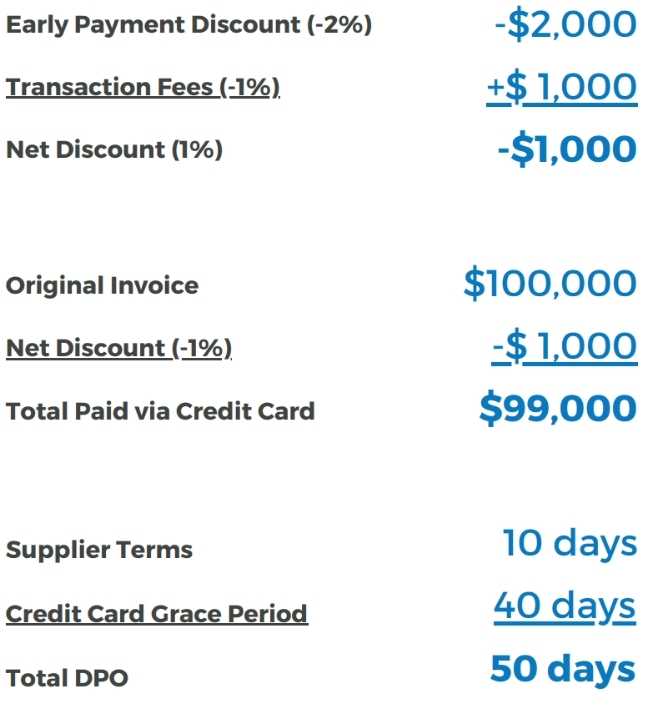
A healthcare buyer owes their supplier $100,000. The supplier offers early payment terms of “2 net 10”, meaning that the buyer receives a 2% discount if they pay the bill within ten days instead of paying the full amount within the contractual payment terms, which is often 30 days.
In this example, the buyer also agrees to pay the cost of the transaction. We will assume 1% for the total fees, as Boost has the ability facilitate payments through its proprietary interchange rates. This amount, subtracted from their 2% discount, still enables them to benefit from a 1% net discount on their original $100,000.
The buyer earns this discount on their transaction while extending the amount of time they have access to their working capital. For this example, we’ll say that they have a remaining grace period of 50 days before they’ll need to pay the credit card bill.
By using the credit card, the buyer can take advantage of the entire ten days of their original early payment terms with the supplier – and the time afforded by the billing cycle of their credit card.
Adding to the benefits of commercial cards
Card payments offer buyers a faster and more secure way to send payments. According to the 2026 AFP Payments Fraud and Control Survey Report, checks are the B2B payment method most often impacted by fraud. 76% of the survey
respondents said their organizations were targeted by a fraud attempt, and 58% reported that they had specifically faced attempted check fraud.
Commercial cards can also reduce the manual work involved in supplier payments. When AP teams must key card details into individual supplier portals, the process consumes valuable time and increases the risk of errors. According to
PYMNTS.com, AP departments spend about 50% of their time collecting invoices and paying suppliers, while 95% of companies that fully automate AP processes achieve greater accuracy, efficiency and overall operational improvements.
Boost’s patented automation technology automates card payments from end to end, eliminating the need for buyers to manually enter card data into supplier portals. This frees AP teams to focus on higher-value priorities while helping payments move more quickly and efficiently.
Want to optimize your working capital and take advantage of early payment discounts?
Talk to the payment experts at Boost about how you optimize your healthcare AP today.
About Boost
Boost Payment Solutions is the global leader in B2B payments with a technology platform that seamlessly serves the needs of today's commercial trading partners. Our proprietary technology solutions bridge the needs of buyers and suppliers around the world, eliminating friction and delivering process efficiency, payment security, data insights and revenue optimization.
Boost was founded in 2009 and operates in 45 countries and territories around the world.